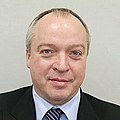
Andrei Skoch: Russia's Sanctioned Billionaire & Duma Member
In the complex tapestry of Russia's economic and political elite, few figures embody the intricate blend of wealth, influence, and international scrutiny quite like Andrei Vladimirovich Skoch. A name frequently appearing on global wealth lists and, more recently, on international sanctions rosters, Skoch represents a unique paradigm: a billionaire businessman who has simultaneously served as a long-standing member of the State Duma, Russia's legislative body, since 1999. His journey from humble entrepreneurial beginnings to a commanding position in the steel industry and then to the halls of power offers a compelling look into the dynamics of modern Russia. However, understanding Andrei Skoch's fortune and influence is impossible without acknowledging the significant international sanctions that now define his public and economic profile.
Andrei Skoch's Enigmatic Net Worth and Business Empire
Estimating Andrei Skoch's fortune presents a fascinating challenge, primarily due to the unique structure mandated by his political office. According to U.S. Forbes Magazine, Skoch has consistently ranked among the world's billionaires since 2012, cementing his status as one of Russia's wealthiest individuals. His primary wealth is derived from his significant, albeit indirect, stake in Lebedinsky Mining, a major player in the steel industry.
The intriguing aspect of Andrei Skoch's net worth, and a crucial detail for understanding his economic power, is that as a member of the State Duma, Russian law prohibits him from directly owning stakes in commercial businesses. To navigate this legal framework, his substantial shares in USM Holdings – a conglomerate with interests spanning metallurgy, mining, and telecommunications, co-founded by fellow billionaire Alisher Usmanov – are held by his immediate family. Specifically, his father, Vladimir Skoch, and his daughter, Varvara Skoch, are the official holders of these key business assets.
This arrangement is not merely a bureaucratic formality; it’s a strategic mechanism that allows Skoch to maintain his economic influence while adhering to political regulations. It also adds a layer of complexity for international bodies attempting to assess and target his assets, especially in the context of sanctions. For those tracking the flow of capital and influence within Russia, understanding this family ownership structure is paramount. The wealth associated with Lebedinsky Mining, a powerhouse in the global steel market, signifies not just personal riches but also significant economic leverage, even if formally held by proxies.
From Entrepreneur to Parliamentarian: The Journey of Andrei Skoch
The remarkable trajectory of Andrei Skoch began far from the opulent boardrooms and political chambers he now occupies. Born on January 30, 1966, Skoch's early life in a settlement near Moscow laid the groundwork for his future endeavors. He attended the same athletics school and Institute of Physical Culture as his future business partner, Lev Kvetnoi, hinting at an early discipline and drive that would characterize his career.
Skoch's initial foray into the business world in the late 1980s was marked by diverse entrepreneurial ventures. He started by opening a bakery with Lev Kvetnoi, a seemingly modest beginning that belied his ambition. From there, he expanded into the burgeoning technology sector, selling computer components, and subsequently ventured into fuel distribution, showcasing a keen eye for nascent markets and profitable opportunities. His professional ascent continued with significant roles, including Deputy General Director at "Kuznetsov and Partners LLC," further solidifying his presence in the evolving Russian business landscape.
A pivotal moment in the rise of Andrei Skoch: from bakery owner to steel magnate came in 1995 when he joined the capital and became Deputy General Director of the investment company "Interfin." His work at MontazhSpetsBank further honed his financial acumen before he reunited with Kvetnoi. The partners eventually merged their business interests with those of the influential billionaire Alisher Usmanov, leading to the formation of USM Holdings. While Kvetnoi later divested his shares, Skoch maintained his significant, albeit indirect, stake, establishing his family as key players in one of Russia's largest industrial conglomerates.
However, 1999 marked a significant pivot for Skoch as he entered the political arena, becoming a member of the State Duma. This transition required him to legally distance himself from direct business ownership, setting the stage for the family-held asset structure that defines his financial empire today. This move illustrates a common pathway for powerful Russian businessmen, where political office can both legitimize and protect vast economic interests, albeit under strict domestic regulations regarding direct ownership.
Navigating Sanctions: The Political and Economic Repercussions
Andrei Skoch's prominent position in both business and politics has inevitably placed him in the crosshairs of international geopolitical tensions. The most significant turning point in his international standing came in 2018 when the U.S. Treasury Department imposed sanctions on him. The stated reason for these sanctions was his "longstanding ties to Russian organized criminal groups," an accusation Skoch has vehemently denied. These U.S. sanctions typically involve asset freezes and travel bans, significantly restricting an individual's ability to engage with the global financial system and travel internationally.
The pressure on Skoch intensified in 2022 following Russia's full-scale invasion of Ukraine. In concert with a broader wave of punitive measures against Russian elites, the European Union (EU) and the United Kingdom (U.K.) also imposed sanctions on him. These measures by multiple global powers underscore the serious nature of the allegations and the international community's response to the actions of the Russian government and its perceived allies.
The implications of these sanctions for Andrei Skoch and his family are profound. While his business shares are formally held by his father and daughter, the intent of sanctions is often to target the individual's ultimate beneficial ownership and influence. This means that access to international markets, banking services, and luxury assets can become severely constrained, even if assets are technically held by proxies. For businesses operating globally, Skoch's case serves as a critical example of geopolitical risk and the complex challenges of compliance. It highlights the intricate web where political affiliations, historical business practices, and national interests intersect, dictating the financial fate of powerful individuals.
For investors and analysts, understanding the rationale behind such sanctions – whether based on alleged criminal ties or political proximity to a sanctioned regime – is crucial. It underscores the importance of due diligence and risk assessment when engaging with entities or individuals connected to regions facing international restrictions. The cumulative effect of U.S., EU, and U.K. sanctions effectively isolates figures like Skoch from significant portions of the global economy, reshaping their personal and business strategies.
Conclusion
Andrei Skoch stands as a compelling figure at the nexus of Russia's economic power and political landscape. From his early days as an entrepreneur building diverse businesses to his current status as a sanctioned billionaire and long-serving Duma member, his career path reflects the unique opportunities and challenges present in modern Russia. The complexities surrounding Andrei Skoch's fortune, particularly the family-held business stakes required by his political office, highlight the intertwined nature of wealth and power in the country. As international sanctions continue to impact his operations and public image, Skoch's story remains a crucial lens through which to understand the evolving dynamics of Russia's elite, their integration into global markets, and the far-reaching consequences of geopolitical tensions.